
Home/Services/Drainage Solutions
Hardscapes
Yard drainage in Fort Wayne, Indiana.
Standing water is the most common call we get in New Haven. The soil underneath most of this area is Blount and Pewamo clay, which perches a water table near the surface from December through May, so a wet spot in your yard is rarely bad luck. It is the ground doing exactly what that ground does until somebody gives the water a way out.
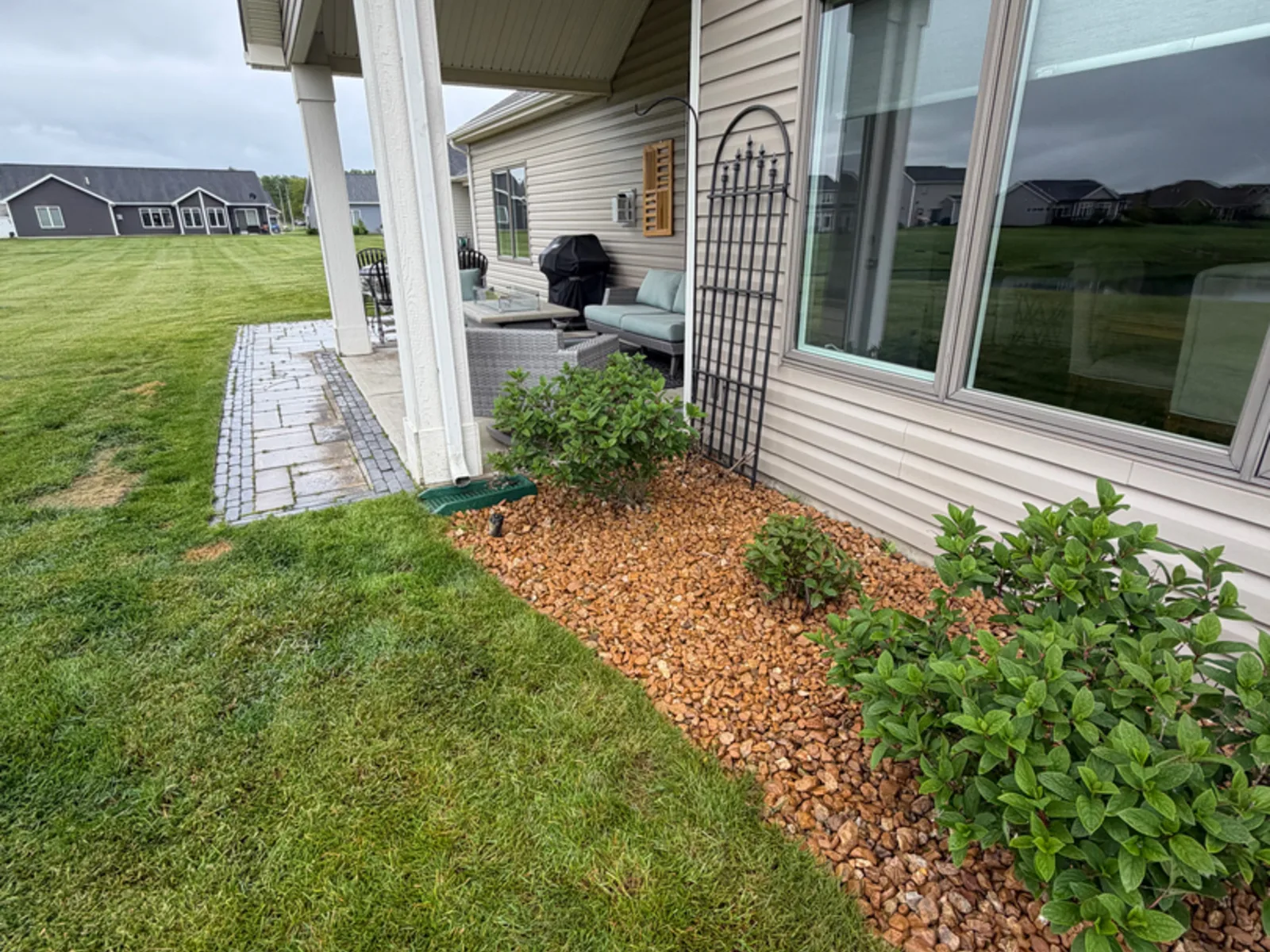
- Most common call in New Haven
- Buried downspout lines
- French drains to daylight
- Fixed before we ever pave
- Regrading away from the house
- Workmanship warranty
- Insured
What a drainage fix from Autana includes
Drainage work is rarely one thing. Most yards need a combination: a downspout that dumps water two feet from the foundation, a low spot that never dries out, and a slope that pushes runoff toward the house instead of away from it. We look at the whole property before picking a fix, not just the spot where the water happens to be standing today.
- Utility locate called before we dig
- Downspouts traced and tied into buried lines
- Pop-up emitters set at daylight or a low point
- River rock channels and swales for surface flow
- French drains where subsurface water needs to move
- Perforated pipe wrapped and bedded correctly
- Regrading to pitch water away from the foundation
- Outlet checked so water actually has somewhere to go
- Sod or seed restored where the trench line ran
- Site cleaned, spoil hauled off
Buried downspout lines and pop-up emitters
A downspout that empties straight onto the ground at the foundation is one of the most common drainage mistakes on older homes, and Joel calls the fix for it "drainers for the gutters": solid pipe run underground from the downspout to a pop-up emitter well away from the house, where the cap only opens when water pressure pushes it up. That keeps roof water from pooling at the foundation and moves it to a spot on the property where it can actually soak in or run off without becoming your neighbor's problem.
Do the math on your own roof
How much water your downspouts drop at the house
Every inch of rain that lands on the roof leaves it at the downspouts, about 0.623 gallons for every square foot. A 1,500 square foot roof in a one inch rain sheds about 930 gallons, roughly 230 at each of four downspouts. On clay that holds water instead of soaking it in, all of that sits against the foundation unless something carries it away. Set your own roof, rain and downspouts below.
That is the water Joel's "drainers for the gutters" carry: a buried line from each downspout out to a pop-up emitter, well away from the house.
The math: one inch of rain over one square foot is 144 cubic inches of water, and a gallon is 231 cubic inches. 144 ÷ 231 = 0.623 gallons.
Where the water actually goes
Most of a drainage fix ends up buried, so here it is drawn to scale instead. This is one property's worth of roof water and groundwater, from the downspout to the point it finally leaves the yard.
- Downspout tied in at the house. The gutter's downspout feeds straight into a buried line instead of dumping onto the ground at the foundation, which is one of the most common drainage mistakes on older homes.
- Buried solid pipe, pitched away from the house. Solid, unperforated pipe carries roof water underground from the downspout toward the outlet, sloped the whole way so gravity keeps it moving instead of pooling partway.
- Trench bedded in gravel. The pipe runs bedded in clean stone rather than loose backfill, so it stays supported and does not settle or trap standing water along its length.
- Geotextile-lined French drain. Where groundwater is the problem instead of roof water, a perforated pipe sits under a visible rock channel inside a trench wrapped in fabric, which keeps the clay from washing in and clogging the stone.
- The clay layer underneath. Blount and Pewamo clay holds a seasonal water table close to the surface from December through May, which is why water that is not routed somewhere on purpose tends to end up at the foundation.
- Pop-up emitter at daylight. The buried line ends at a spring-loaded cap that only opens under water pressure, releasing the flow well away from the house instead of letting it stand at the outlet.
- Slope regraded away from the house. The yard's surface is reshaped to fall away from the foundation, so gravity is doing part of the work before a drop of water ever reaches a pipe.
- River rock at the outlet. A splash of stone spreads the water out where it daylights, so the outflow does not carve a bare channel into the lawn.
River rock channels, swales and French drains to daylight
Surface water moving across a lawn gets carried in a shaped swale or a river rock channel, both of which slow the water down and route it visibly to where it needs to go, useful anywhere the flow is occasional but heavy, like a downspout outlet or a low run between two houses. Subsurface water is a different problem and needs a French drain: a trench with perforated pipe bedded in clean stone, wrapped in fabric to keep the clay from clogging it, sloped to daylight at an outlet lower than the wet spot it is draining. Both approaches show up on the same property regularly, since roof water and groundwater rarely follow the same path.
Regrading away from the foundation
Sometimes the fix is not a pipe at all, it is the slope of the ground itself. Soil settling over years, mulch beds built up too high against the siding, or a grade that was never pitched correctly to begin with can all send water toward the house instead of away from it. Regrading resets that slope so gravity does the work on its own, which is often the cheapest and most permanent fix available on a given property.
Why you fix drainage before you pave
Water that runs under a patio takes the base with it, no matter how well that base was compacted. That is why we install drainage before paving on sloped or wet sites, and it is also why the workmanship warranty on a patio, wall or fire pit explicitly does not cover drainage changes made by others after the fact. Fix the water first, then build on top of ground that stays where it is put.
The perched water table, December through May
Pewamo silty clay, common in the low spots and swales around this metro, is very poorly drained and carries a water table sitting anywhere from 30 centimeters above to 30 centimeters below the surface between December and May. Blount, the more common soil across upland yards, is somewhat poorly drained with a seasonal high water table 6 to 24 inches down over roughly the same stretch of the year. That is not a one-time storm event. It is months of saturated ground every year, which is why a drainage fix here has to move water reliably, not just handle the occasional downpour.
Tunnel Works, the stormwater ordinance, and where your runoff goes
Fort Wayne's Tunnel Works project, a five-mile deep rock tunnel about 200 to 220 feet below grade completed in 2025, was built to cut combined sewer overflows from roughly 71 a year down to about 4. The city also enforces a Stormwater Management Ordinance under City Code Chapter 53, which requires property owners to maintain their own on-site stormwater control. The practical takeaway for a homeowner: every square foot of new hard surface you add has to send its runoff somewhere specific, not just wherever it used to soak in. That is one more reason drainage gets planned before a patio or a wall goes in, not worked out afterward.
How the fix runs, step by step
-
Walk the property after it rains, if we can
Joel walks the yard, ideally after a rain event, to see where water actually collects and moves rather than guessing from a dry lawn.
-
Written quote out of Jobber
Run length, outlet distance, and which approach fits, buried line, French drain, swale or regrading, in writing, free.
-
Locate utilities and open the trench
Locates called before digging, trench cut to the depth and slope the fix requires, spoil set aside for restoration.
-
Set pipe, stone and fabric
Perforated pipe bedded in clean stone and wrapped in fabric where the clay would otherwise clog it, sloped consistently to the outlet.
-
Tie in the outlet
Pop-up emitter, daylight point or existing storm connection tied in and checked so water actually has somewhere to go once it leaves the pipe.
-
Backfill and restore the surface
Trench backfilled and compacted, sod or seed restored along the line so the fix disappears into the lawn once it is finished.
-
Test it and walk it with you
Water run through the system where possible to confirm flow, then a walk-through so you know exactly what is buried and where.
Recent drainage work
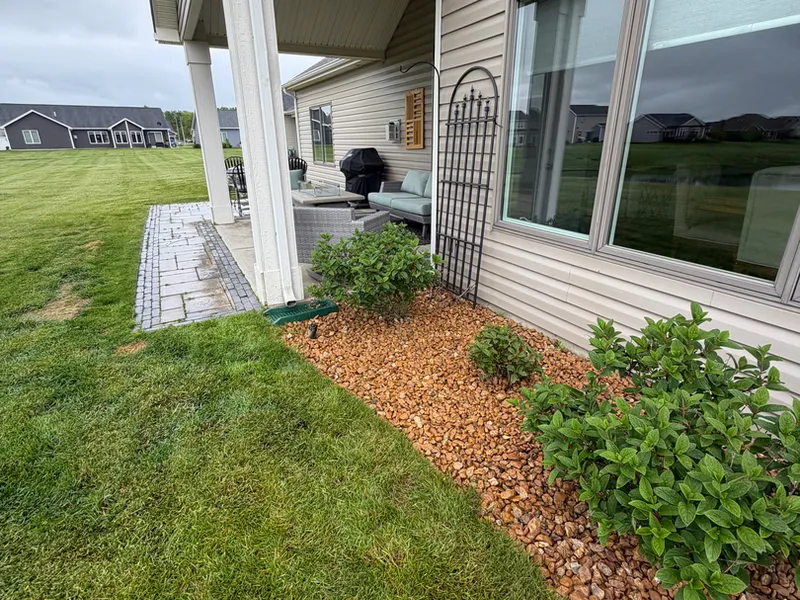
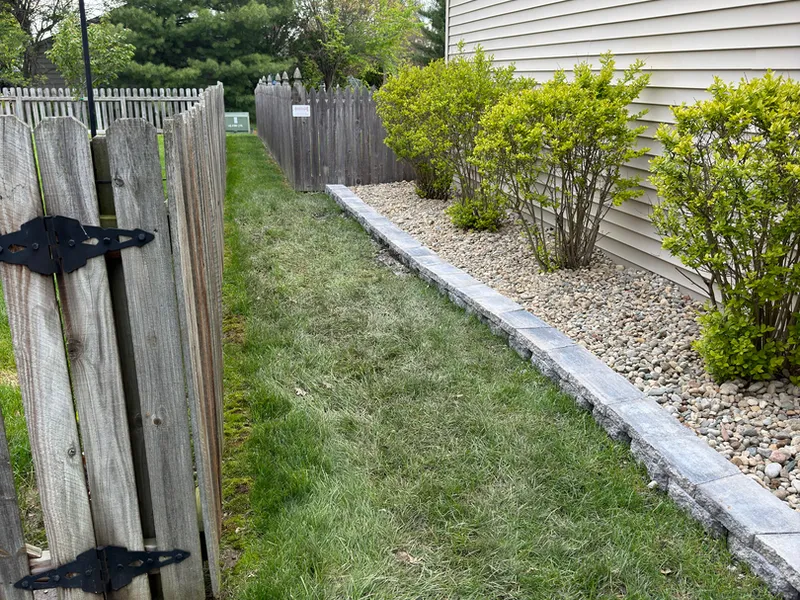
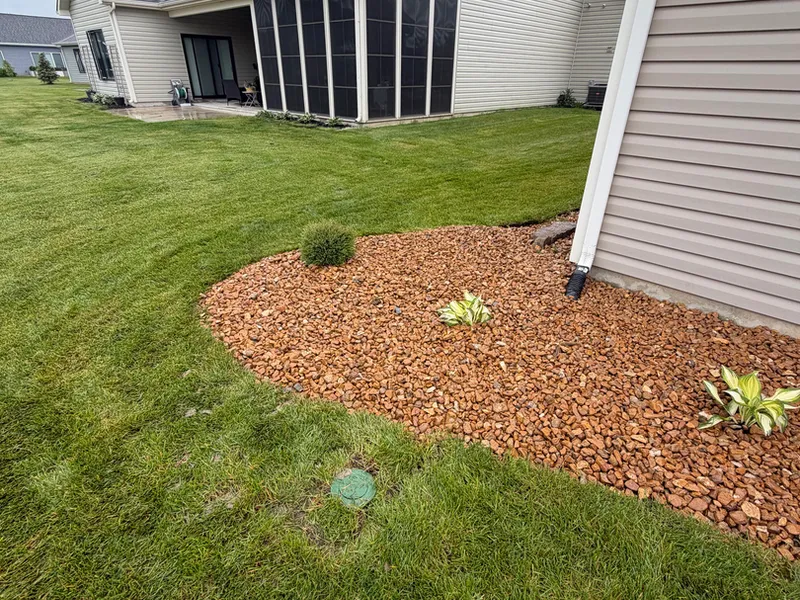
Yard drainage questions
Almost always the clay under your yard, not a one-time drainage failure.
Blount and Pewamo clay carry a perched water table from roughly December through May, sitting anywhere from at the surface to about two feet down. Without a path for that water to move, it just sits until the ground dries out on its own months later.
A trench with perforated pipe bedded in stone that carries subsurface water to daylight.
It is the right fix when water is moving underground rather than across the surface, for example a soggy low spot that never fully dries. A river rock channel or regrading handles surface flow instead, and a lot of yards need both.
Buried pipe that carries downspout water away from the foundation to a pop-up emitter.
It is one of the most common fixes on older homes, where a downspout was left emptying straight onto the ground a foot or two from the house.
Before. Always before.
Water that runs under a patio takes the compacted base with it. We install drainage first on any sloped or wet site, and the workmanship warranty on hardscape work does not cover drainage changes made after the fact by someone else.
It can, if the added runoff is not planned for.
Fort Wayne enforces a stormwater management ordinance requiring property owners to maintain their own on-site stormwater control, and more hard surface means more runoff has to go somewhere specific. That is factored into the drainage plan whenever we build a new patio or wall.
It depends on run length, outlet distance and how much regrading is involved.
Standalone drainage jobs are quoted from run length, outlet distance and how much regrading the site needs. Drainage installed as part of a larger patio or wall build is priced into that project.
Related work
Drainage fixes often show up alongside these:
-
Paver patios
Drainage goes in before the base, every time, on any sloped or wet site.
-
Retaining walls
The same clean stone and drain pipe protecting a wall does the same job on its own.
-
Landscaping and mulch beds
River rock beds and regrading finish a drainage fix into the rest of the yard.
-
Lawn care and mowing
A yard that finally drains is a lot easier to keep mowed and healthy through a wet spring.
Yard drainage by city
Also serving: Garrett, Columbia City, Warsaw, Huntertown, Leo-Cedarville, Grabill, Harlan, Woodburn, Monroeville, Hoagland, Waterloo, Butler and Kendallville.
Where to next
Free quote
Get your drainage fix priced this week.
Tell us where the water is collecting. Joel will come look, and the quote comes back in writing.