
Home/Service Areas/New Haven, IN
Our home townHardscaping & landscaping in New Haven, Indiana
We are based here, off IN-37 on the east side of town. Roughly 16,000 people, a lot of 1950s ranches, a lot of brand new builds off Green Road, and clay under all of it that decides how every patio and wall in this town has to be built.
What New Haven yards actually deal with
New Haven sits on the south bank of the Maumee, just east of Fort Wayne, and the ground here tells you what it is the first time you put a shovel in it. The dominant soils across eastern Allen County are Blount, Glynwood and Pewamo. The USDA describes Blount as somewhat poorly drained, 35 to 45 percent clay in the subsoil, with a seasonal water table sitting six to twenty four inches under your feet. Pewamo, which fills the swales and the low corners of a lot of properties out here, is very poorly drained, 40 to 50 percent clay, and carries water at or above the surface from December straight through May.
Add roughly 40 inches of rain and 33 inches of snow a year, and somewhere between 83 and 119 days below freezing depending on the winter. That combination is why New Haven backyards get soggy strips along the foundation, why fence posts lean, and why a patio built on a thin base does not stay level.
The Maumee is closer than people think
The USGS runs a stream gauge on the Maumee right here in New Haven, station 04183000, and this town is inside the Maumee River Basin Commission's territory. The Commission's own advice to homeowners is worth repeating: check your flood zone, get a check valve on your drain tile and sanitary line, and keep a working sump. Basin floods are documented history here, from the Great Flood of 1913 through the March 1978 event that the USGS wrote a whole report about.
None of that means your street floods. It means water management is not optional on a New Haven property, and that anything we build has to move water rather than trap it. The city runs its own stormwater and MS4 program under IDEM permit INR040063, and their point is the same as ours: every new hard surface you add pushes more runoff somewhere else, faster.
Two kinds of New Haven house, two different jobs
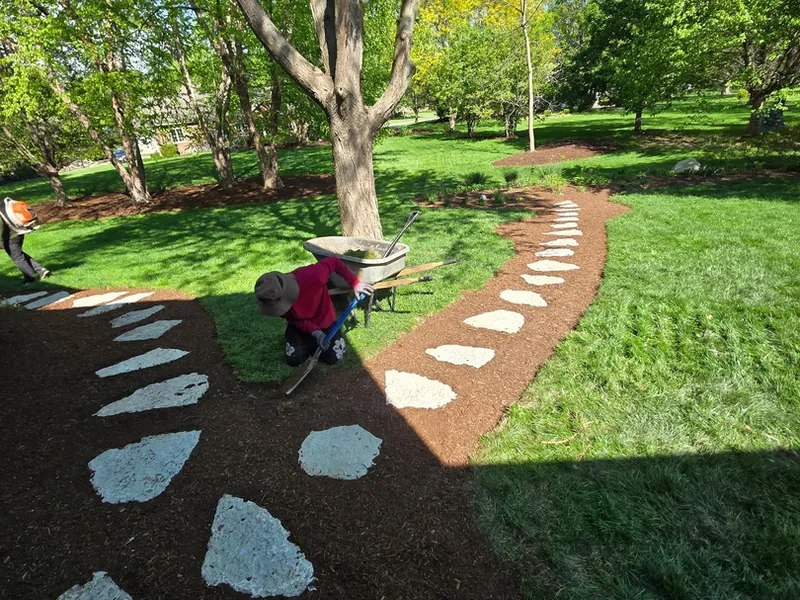
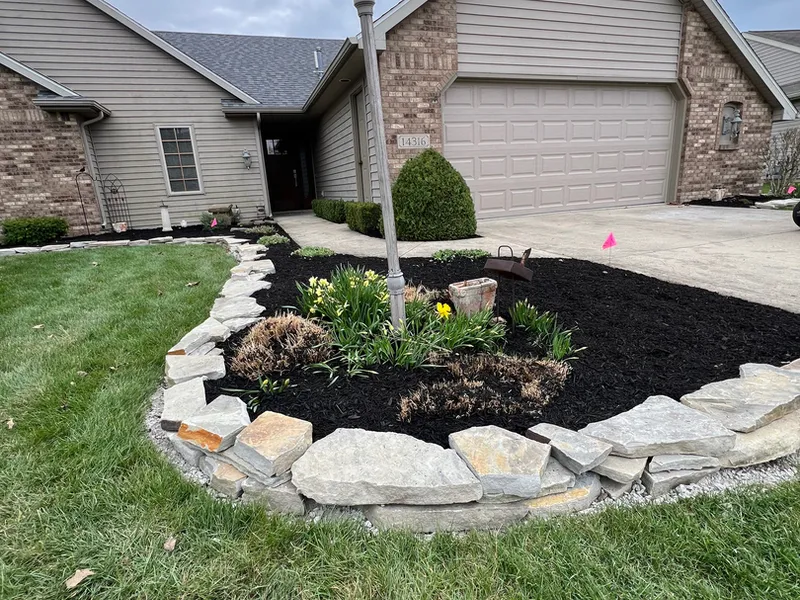
About 36 percent of the housing here went up between 1940 and 1969, mostly modest capes and ranches, and another 35 percent between 1970 and 1999. Those are the houses where we do bed rebuilds, stone edging, drainage corrections and stepping stone paths. The beds are usually forty years old, the edge has disappeared into the lawn, and the downspout has been dumping in the same spot since Nixon.
Then there is the other fifth of the town. Roughly 22 percent of New Haven's homes were built in 2000 or later, and subdivisions like Riverwalk, Greenwood Lakes, Kennebec and Pinestone are still adding lots. Those are the calls for a first patio, a fire pit, a retaining wall to make a graded back lot usable, and a full landscape package because the builder left two shrubs and a strip of sod. Owner occupancy in New Haven runs about 76 percent, which is to say most of these are people improving a house they plan to keep.
New Haven facts we build around
- Dominant soil
- Blount, Glynwood and Pewamo series. High clay, poor to very poor drainage, seasonal perched water table.USDA NRCS Official Series Descriptions
- Footing depth
- 36 inches is the commonly applied northern Indiana frost depth. Confirm with the county for structural footings.Indiana Building Code 675 IAC 14-4, per local contractor guidance
- Precipitation
- About 39.6 inches of rain and 33 inches of snow annually at the Fort Wayne station.NWS Northern Indiana climatology
- Population
- 16,337 as of the July 2025 estimate, up about 4.7 percent since the 2020 census.US Census QuickFacts
- Median home value
- $166,900 in the 2020 to 2024 American Community Survey estimate.US Census QuickFacts
- Permits
- New Haven issues a Residential Improvement Location Permit. Fence permits are $25 and decks are $50. Patios and retaining walls are not listed with a published threshold, so call Planning at 260-748-7040 before you dig.City of New Haven ILP application
- Stormwater
- City MS4 program under IDEM permit INR040063. Only rainwater may enter storm drains.City of New Haven Storm Water and MS4 Program
Where you will see our trucks
We work the whole city, but the routes we run most often are the older streets around Meadowbrook and New Haven South, the newer sections off Green Road and Werling Road, and out along the SR-930 corridor toward Besançon. If you have walked the Maumee Pathway, the 8.75 mile eastern leg of the Fort Wayne Rivergreenway that ends at Moser Park, you have walked past a fair amount of our work.
We are also here on the weekends. Canal Days is the town's homecoming, and Schnelker Park and Moser Park are where half of New Haven ends up in June. Being based right here is the reason our pricing works out and the reason a callback takes half an hour instead of half a week.
- Meadowbrook
- New Haven South
- Riverwalk
- Riverwalk Villas
- Greenwood Lakes
- Kennebec
- Pinestone
- SR-930 corridor
- Besançon
- Moser Park area
What we do in New Haven
-
Paver patios
Deeper excavation and base compacted in lifts, because Blount clay will pump up into a thin base and take your patio with it.
-
Drainage and downspout work
The single most common New Haven call. Buried downspout runs, rock channels and regrading to move roof water off the foundation.
-
Retaining walls
For the graded back lots in the newer subdivisions, always with clean stone and a drain line behind the block.
-
Landscape bed rebuilds
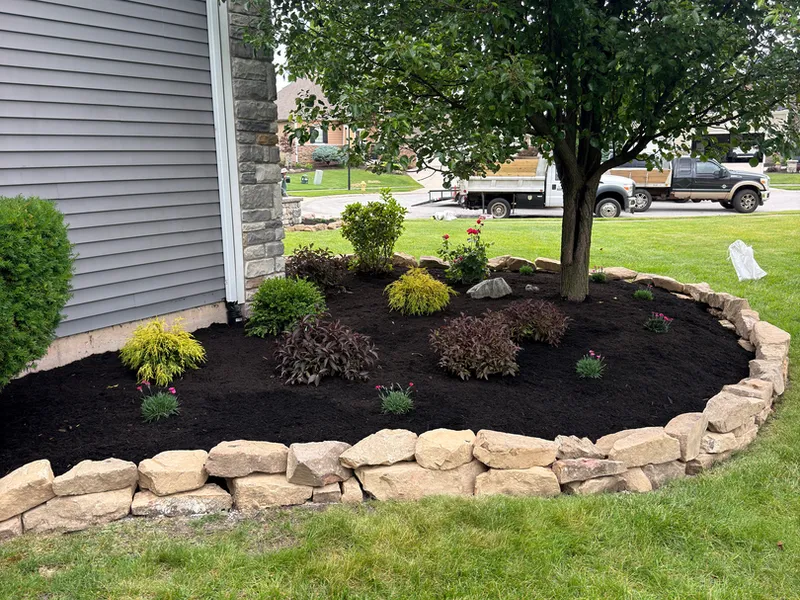
Resetting the edge, pulling forty years of weed root, replanting and mulching the beds on the older ranches.
-
Weekly mowing and cleanups
Bagged or mulched, edged, with the beds kept clear every visit. Spring and fall cleanups included on most routes.
-
Snow removal and salting
Residential drives and walks, plus commercial lots and HOA common ground through the New Haven winter.
New Haven questions
Probably not for an at grade patio, but New Haven does not publish a clear threshold, so call and confirm.
The city's Residential Improvement Location Permit application lists fences at $25 and decks at $50. Patios and retaining walls are not named on it. New Haven Planning is 260-748-7040 and they answer. We will make the call for you on any job we quote.
Yes, and in New Haven it is usually a combination of three fixes rather than one.
Roof water gets buried and carried away from the house, the low spot gets regraded or given a rock channel, and if the water table is the real issue we cut a French drain to daylight. On Pewamo ground the goal is moving surface water off, not trying to make clay absorb it. It will not.
Estimates go on the calendar two days to two weeks out, between 10am and 6pm.
Install dates depend on the season. Spring patio slots fill first, so a February quote usually gets an April or May build. Being local, we can often work a small New Haven job into a route gap faster than a job across the county.
We do, with the design changed to suit it.
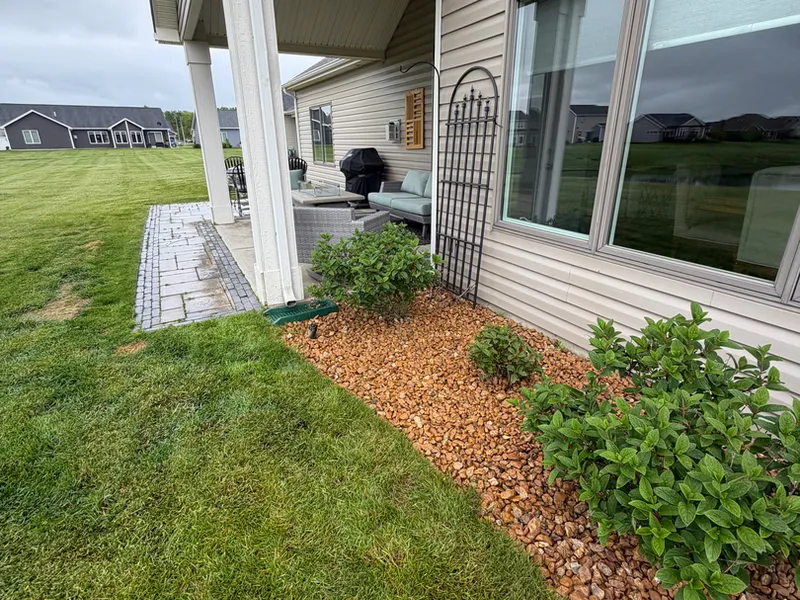
On low ground near the Maumee we favor permeable borders, rock instead of mulch where water moves, and drainage that has somewhere real to go. Check your flood zone on the Indiana Floodplain Information Portal first. The Maumee River Basin Commission also recommends a backflow check valve on your drain tile, which is cheap insurance and outside what we install.
Recent work
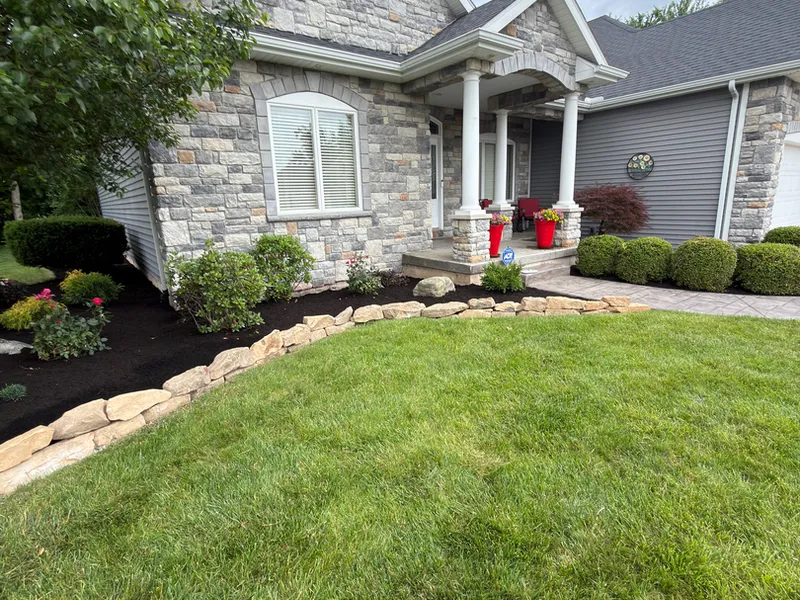
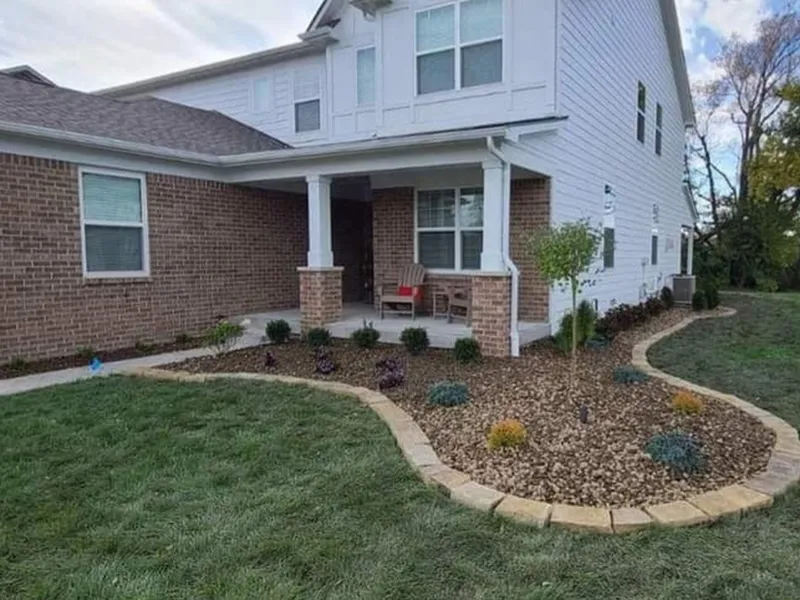
Built in New Haven.
Three of the six New Haven jobs in our current photo set. Every one is ours; none is stock.
Find us
Right here in New Haven.
Autana Hardscapes
11186 IN-37
New Haven, IN 46774
(260) 258-2986
Nearby towns we cover: Fort Wayne, Auburn, Woodburn, Monroeville, Hoagland, Harlan, Grabill, Leo-Cedarville and Garrett.
Where to next
Free quote
New Haven neighbor? You are first on the route.
Send the address and a sentence about the project. Joel calls back in about 30 minutes during working hours.