
Home/Service Areas/Fort Wayne, IN
A city growing on two endsHardscaping and landscaping across Fort Wayne, Indiana
Fort Wayne added more residents in the last five years than any other large Midwest city, and nearly all of that growth is showing up on the southwest and northwest side while the historic core a few miles away sits almost untouched. We work both halves of the city, and the job looks different depending on which one we are on.
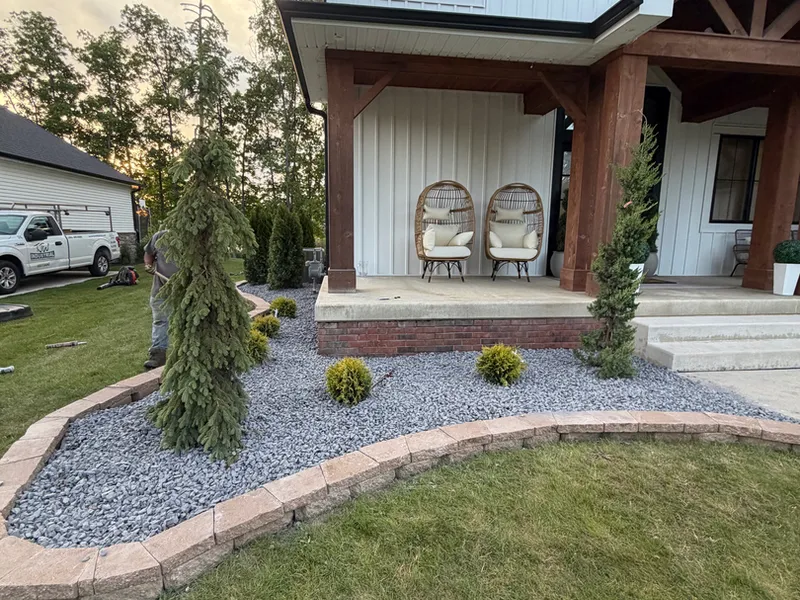
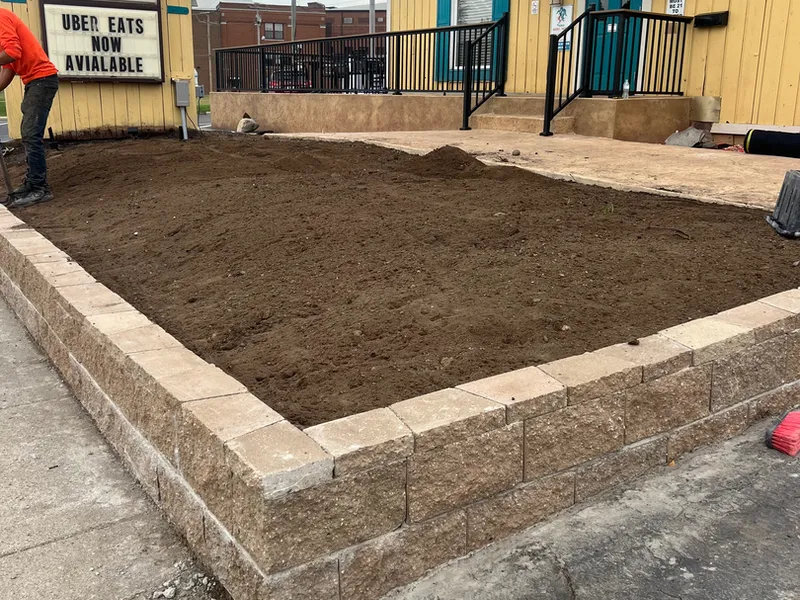
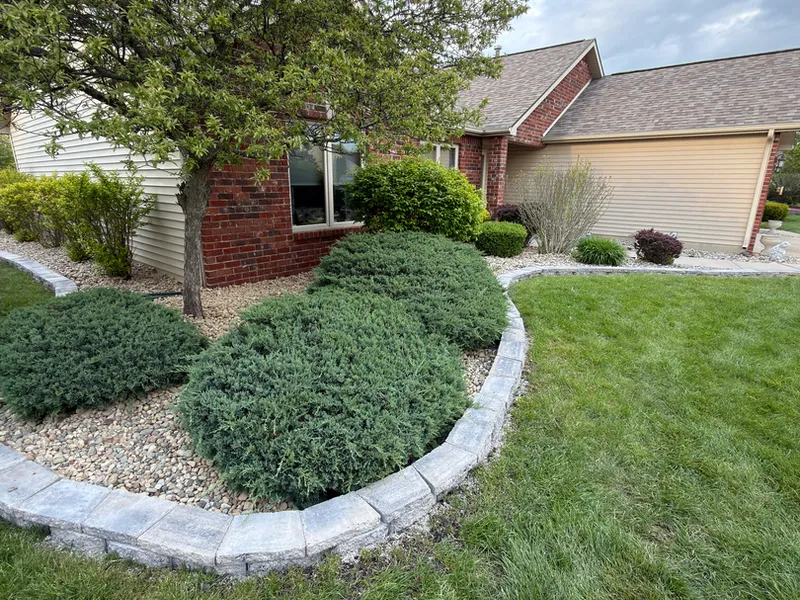
One city, two very different yards
Fort Wayne is cited as the fastest-growing large city in the Midwest, adding more than 11,000 residents in five years and pushing the population to 275,203, with Allen County now at 402,329. Almost all of that growth is stacking up on the southwest and northwest side. Aboite, the Covington cluster, Chestnut Hills, Copper Hill and Sycamore Hills keep filling in, and right now the active building is happening at Grey Hawk, Mercato and Verona Lakes near Aboite, and at Rolling Oaks, Quail Creek and Stratford Forest up toward the I-69 and I-469 interchange. The pattern on almost every one of those lots is identical. The builder grades it, sets two shrubs by the front door, and hands over the keys. Everything that follows, the first patio, the retaining wall that turns a graded slope into a usable backyard, the landscape package around a foundation, is where we start.
Head toward downtown and the job changes completely. West Central, Williams-Woodland Park, Forest Park Boulevard, Southwood Park and Lakeside are full of houses built between the 1890s and the 1950s, Greek Revival, Colonial Revival, Tudor and Craftsman bungalow, several with architects Wing and Mahurin in their history. Those lots do not need a first landscape. They need a bed rebuilt properly, stone edging reset where the lawn swallowed it years ago, drainage that corrects a real problem instead of hiding it, and a wall built in a material that fits a ninety-year-old house rather than fighting it.
Water wrote a lot of this city's rules
Three rivers meet in Fort Wayne, and the city has not forgotten what that can mean. The 1982 flood followed a winter that dropped roughly 81 inches of snow. The fast melt caused about $57 million in damage and pulled in roughly 10,000 teenage volunteers to sandbag the city, and the levees and Headwaters Park downtown exist because of what happened that spring. The newest piece of that same story is Tunnel Works, a $188 million deep tunnel project finished in 2025 that is expected to cut combined sewer overflows from about 71 a year down to roughly 4. The city's own Stormwater Management Ordinance, Code Chapter 53, carries the same logic down to individual properties: owners are expected to maintain their own on-site stormwater controls. Every square foot of patio, walkway or driveway a homeowner adds has to send its runoff somewhere, and Fort Wayne has spent decades and nine figures making sure that somewhere is planned rather than accidental.
Permits, in plain terms
An at-grade patio generally does not require a building permit in Fort Wayne. What does need paperwork is anything touching the right-of-way. A new or altered driveway requires an Access and Driveway Permit through Public Works, $50 for a residential lot, and the standing rule is one driveway per street frontage, with exceptions for corner lots and lots over 100 feet wide. A retaining wall that runs roughly four feet from the bottom of the footing to the top of the wall, the general figure used across Indiana, is the point where stamped engineering typically gets involved. When a Fort Wayne job needs a call made, we make it, to the Allen County Building Department at 260-449-7131, before anyone breaks ground.
Fort Wayne facts we build around
- Population
- 275,203 in the city, 402,329 in Allen County, the fastest-growing large city in the Midwest over the last five years.US Census Bureau, July 2025 estimate
- Median home value
- $188,900, up 11.3 percent year over year.US Census ACS 2020-2024
- Homeownership
- 61.9 percent own their home, against a 65.2 percent national rate.US Census ACS 2020-2024
- Housing age
- 40.4 percent of homes were built between 1970 and 1999.US Census ACS 2020-2024
- Soil
- Blount, Glynwood and Pewamo glacial till, 35 to 50 percent clay in the subsoil, seasonal water table as shallow as 6 inches.USDA NRCS Official Series Descriptions
- 1982 flood
- About $57 million in damage after roughly 81 inches of winter snow melted fast; about 10,000 teenage volunteers sandbagged the city.Fort Wayne flood history, Maumee River Basin Commission
- Tunnel Works
- $188 million deep tunnel project completed in 2025, expected to cut combined sewer overflows from about 71 a year to about 4.City of Fort Wayne, Tunnel Works / 3RPORT project
- Driveway permit
- $50 residential Access and Driveway Permit through Public Works right-of-way permitting; one driveway per street frontage.City of Fort Wayne Public Works
Where you will see our trucks
On the growth side we are out in Aboite and the Covington cluster constantly, and increasingly up around Grey Hawk, Mercato, Rolling Oaks and Stratford Forest as those subdivisions add lots. On the historic side we spend real time in West Central, Southwood Park and around Forest Park Boulevard, resetting beds and correcting drainage that has been ignored for a generation. Chestnut Hills, Copper Hill and Sycamore Hills sit in between, older enough to need bed work and new enough to still see the occasional first patio.
- Aboite
- Covington
- Chestnut Hills
- Copper Hill
- Sycamore Hills
- Grey Hawk
- Mercato
- Verona Lakes
- Rolling Oaks
- Quail Creek
- Stratford Forest
- West Central
- Williams-Woodland Park
- Forest Park Boulevard
- Southwood Park
- Lakeside
What we do in Fort Wayne
-
Retaining walls
Often the first structure on an Aboite or Covington lot, built with drainage behind the block so a graded slope actually stays where you put it.
-
Paver patios
First patios for the growth belt subdivisions, deep base and edge restraint sized for Blount and Glynwood clay.
-
Drainage solutions
Regrading and buried downspout runs that keep runoff on your own lot, the way Code Chapter 53 expects a property owner to manage it.
-
Landscape bed rebuilds
Resetting stone edging and replanting beds around West Central, Southwood Park and Lakeside homes that have not been touched in decades.
-
Outdoor lighting
Path and accent lighting that works equally well on a brand new Mercato front walk or a stone Southwood Park porch.
-
Lawn care and mowing
Routine mowing and edging for HOA common ground and larger growth belt lots, plus spring and fall cleanups on the older side of town.
Fort Wayne questions
Generally no. An at-grade patio does not typically require a building permit in Fort Wayne.
Where a permit does come in is anything touching a driveway or the right-of-way, which runs through Public Works as a separate $50 residential Access and Driveway Permit. If your project sits near a wall over roughly four feet or a driveway change, we confirm with the Allen County Building Department, 260-449-7131, before we schedule anything.
Most new-construction lots on the southwest side start with grading correction and drainage, then the hardscape.
A builder-graded lot usually needs the slope checked before anything else, since that determines whether a retaining wall is required to make the backyard usable. From there most owners go patio first, then beds and lighting once the hardscape is settled. We walk the lot and price it in that order.
It can, especially if you are adding a lot of hard surface at once.
Code Chapter 53 expects property owners to maintain their own on-site stormwater controls, and a big patio, driveway extension or paved side yard changes how much water leaves your lot and how fast. We design drainage into the hardscape rather than adding it after the fact, which keeps a project on the right side of that expectation.
Usually a full reset rather than a refresh: pull the old edge, correct the grade, then rebuild.
On homes from the 1890s through the 1950s the bed edge has almost always disappeared into the lawn and the soil underneath has compacted. We reset the line in stone, correct drainage where roof water has been sitting against the foundation, and replant in a way that suits the house instead of a generic builder package.
Indirectly, yes, through how much hard surface the city expects you to manage responsibly.
Tunnel Works, the $188 million project finished in 2025, was built to cut sewer overflows the city has dealt with since the 1982 flood. That history is why Fort Wayne takes on-site stormwater control seriously at the property level. It does not mean your yard is at risk. It means we design every patio and driveway to move water the way the city expects, not around it.
Find us
Based in New Haven, working all over Fort Wayne.
Autana Hardscapes
11186 IN-37
New Haven, IN 46774
(260) 258-2986
Nearby areas we also serve: New Haven, Auburn, Garrett, Columbia City, Huntertown, Leo-Cedarville, Grabill and Woodburn.
Where to next
Free quote
Building or fixing in Fort Wayne? Let's look at the lot.
Send the address and a sentence about the project. Joel calls back in about 30 minutes during working hours.